Materiales de referencia en apoyo a la seguridad del juguete
13 de mayo de 2010
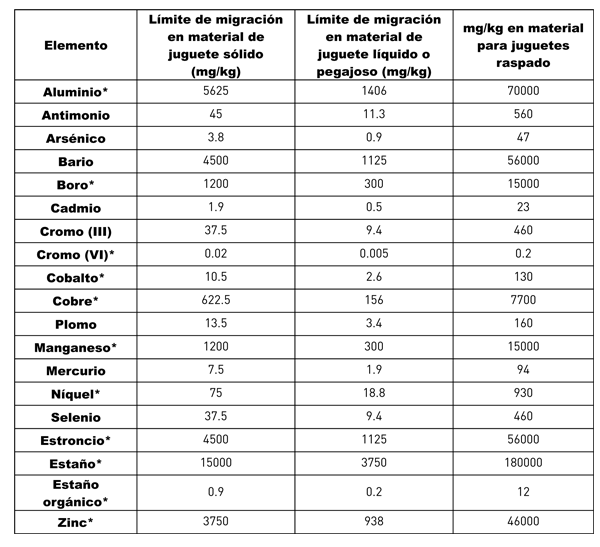
El sector infantil es el que centra una mayor atención en este ámbito, debido principalmente a que es uno de los sectores más vulnerables de la población. Es por ello que la legislación que afecta directamente al juguete ha sido siempre muy exigente (data desde la primera directiva del año 1988) y recientemente ha sido revisada, reforzando considerablemente los requisitos exigidos en cuanto a seguridad química (nueva Directiva de Seguridad de los Juguetes, 2009/48/CE, publicada el pasado año 2009). En este aspecto cabe mencionar, el control sobre la biodisponibilidad de ciertos elementos químicos que pueda contener el juguete. Esta biodisponibilidad viene determinada por la migración de estos elementos, considerados tóxicos, desde la matriz del juguete a la superficie. En concreto, los límites de migración con respecto a la anterior directiva se han visto reforzados aumentando el número de elementos tóxicos regulados (tabla 1).

Ante esta situación, se ha generado la necesidad de mejorar las técnicas analíticas para la demostración del cumplimiento con los límites legales establecidos. Uno los aspectos fundamentales en la validación de una técnica analítica es la exactitud de los resultados obtenidos. Estos deben comprobarse comparativamente con una correcta referencia que confirme la exactitud de la técnica analítica empleada. En este caso, el empleo de materiales de referencia certificados es la solución más óptima para la determinación de la migración de elementos tóxicos.
Los materiales de referencia certificados se caracterizan por poseer una o varias de sus propiedades preestablecidas de manera homogénea y estable. Para el uso de este tipo de materiales, en el caso de la determinación de la migración de elementos tóxicos, se establece como propiedad prioritaria la concentración del elemento tóxico del cual interesa conocer la cantidad que ha migrado como resultado de la técnica analítica aplicada. El empleo de estos materiales de referencia con fines comparativos en el momento mismo del ensayo del producto eliminará la necesidad de realizar un análisis más específico, si el resultado preliminar no indica la presencia del elemento tóxico objeto del análisis. Esta optimización contribuirá a aumentar la eficiencia del control del producto, y por lo tanto también la seguridad y calidad de los mismos.
Por la seguridad en el sector juguetero
Uno de los principales problemas del empleo de materiales de referencia certificados, en el caso específico del estudio de la migración, es la escasa oferta que existe en el mercado y su elevado coste. Esta es una de las razones por las que la empresa Colortec Química, en colaboración con el Instituto Tecnológico del Juguete (Aiju) e IISG, está desarrollando un proyecto para la preparación de materiales poliméricos que se puedan utilizar como materiales de referencia certificados para los ensayos de migración de elementos tóxicos en juguetes y artículos de uso infantil de acuerdo con los nuevos requisitos establecidos por la nueva Directiva de Seguridad de Juguetes 2009/48/CE.
La empresa Colortec Química, fundada a mediados de los 80, y que está llevando a cabo este proyecto, centra su actividad en la industria química. Dedicada al diseño y al desarrollo de pigmentos y colorantes a medida, la producción y comercialización de los mismos, así como la comercialización de otros aditivos para plásticos. Destaca su trabajo en el sector de la industria juguetera y de artículos de uso infantil.
En colaboración con Colortec Química, participan en el proyecto, por un lado, Aiju como instituto tecnológico del juguete, entidad privada sin ánimo de lucro dedicada al servicio científico y técnico requerido por las empresas fabricantes de productos infantiles y de ocio; y por otro lado, la empresa italiana IISG, compañía italiana para la seguridad de los juguetes, entidad privada formada por ingenieros, químicos y técnicos en activo desde 1978, dedicada a la seguridad de los juguetes y certificación de productos infantiles.
Este proyecto, enmarcado dentro del programa europeo Eurostars (iniciativa Eureka y la Comisión Europea), ayuda a las pymes que realizan actividades de I+D a desarrollar proyectos trasnacionales orientados al mercado, impulsando de este modo la competitividad de las empresas europeas mediante el fomento de la realización de proyectos tecnológicos. En España, los proyectos enmarcados en este programa son gestionados por el Ministerio de Ciencia e Innovación, a través del CDTI, Centro para el Desarrollo Tecnológico Industrial, dentro del programa de financiación Interempresas Internacional.
Este proyecto, enmarcado dentro del programa europeo Eurostars (iniciativa Eureka y la Comisión Europea), ayuda a las pymes que realizan actividades de I+D a desarrollar proyectos transnacionales orientados al mercado, impulsando de este modo la competitividad de las empresas europeas mediante el fomento de la realización de proyectos tecnológicos. En España, los proyectos enmarcados en este programa son gestionados por el Ministerio de Ciencia e Innovación, a través del CDTI, Centro para el Desarrollo Tecnológico Industrial, dentro del programa de financiación Interempresas Internacional.